HCM for Roundabout Intersections
The Traffic Control table for the HCM 7th Edition, HCM 6th Edition and the HCM 2010 method for roundabouts is shown in the figure of the table below.
Table definitions are presented in the table below the figure HCM Traffic Control Table: HCM for Roundabout Intersections. Common parameters are described in a separate chapter (see section Common Parameters and Unknown Control Type).
Figure 16: HCM Traffic Control Table: HCM for Roundabout Intersections
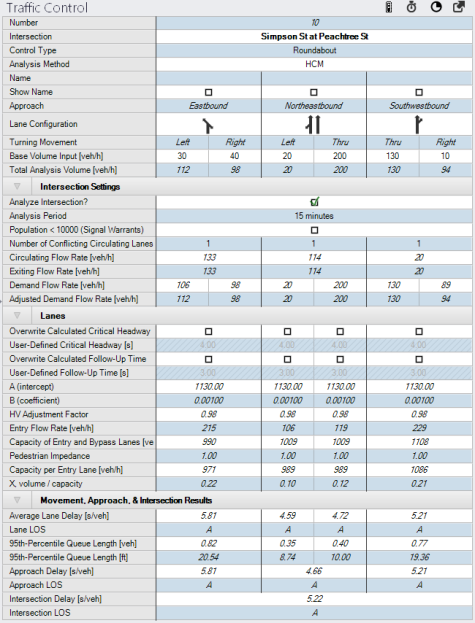
Table 21: Traffic Control Parameters: Roundabouts - HCM for Roundabout Intersections
| Parameter | Description | Units |
|---|---|---|
|
Intersection Settings |
||
|
Analyze Intersection? |
A check box indicates this intersection will be included in the reports. Intersections, for which the flag is deactivated, are not exported to Vissim. This allows to export partial networks. |
|
|
Analysis Period |
Time period for the analysis, either 15 min, utilizing the peak 15-min flow multiplied by 4 assigned by the PHF, or 1 hr, ignoring the PHF. |
|
|
Number of Conflicting Circulating Lanes |
Number of lanes directly in conflict with the approach entry lanes. |
|
|
Circulating Flow Rate |
Number of vehicles circulating in the roundabout and passing in front of the entry approach, conflicting with the entry flow. |
veh/h |
|
Exiting Flow Rate |
Number of vehicles exiting on the specific approach. |
veh/h |
|
Demand Flow Rate |
Volumes represented as an hourly flow rate |
veh/h |
|
Adjusted Demand Flow Rate |
Demand Flow Rate adjusted for heavy vehicles |
veh/h |
|
Lanes |
||
|
Overwrite Calculated Critical Headway? |
Checkbox to allow for overwriting of calculated critical headway value. |
|
|
User-Defined Critical Headway |
Value of critical headway, if defined by user |
s |
|
Overwrite Calculated Critical Follow-Up Time? |
Checkbox to allow for overwriting of calculated critical follow-up time value. |
|
|
User-Defined Critical Follow-Up Time |
Value of critical follow-up time, if defined by user |
s |
|
A (intercept) |
Capacity model intercept based on follow-up headway used for calibration |
|
|
B (coefficient) |
Capacity model coefficient based on critical and follow-up headway used for calibration |
|
|
HV Adjustment Factor |
Adjustment factor for heavy vehicles, based on heavy vehicle percentage input in volumes table. |
veh/h |
|
Entry flow rate |
Approach entry flow rate by lane |
veh/h |
|
Capacity of Entry and Bypass Lanes |
Total capacity of entry and bypass lanes by approach |
veh/h |
|
Pedestrian impedance |
Capacity reduction factor to account for impedance of conflicting pedestrians |
|
|
Capacity per Entry Lane |
Entry capacity converted to vehicles per hour |
veh/h |
|
X, volume / capacity |
Volume to capacity ratio per lane of entry |
|
|
Movement, Approach, & Intersection Results |
||
|
Average Lane Delay |
Average control delay per lane of entry |
s/veh |
|
Lane LOS |
Level-of-s2ervice per lane of entry |
|
|
95th-Percentile Queue Length |
95th percentile queue length measured in number of vehicles per lane |
veh |
|
95th-Percentile Queue Length |
95th percentile queue length measured in feet per lane |
ft |
|
Approach Delay |
Average control delay for the selected approach |
s/veh |
|
Approach LOS |
Level-of-service for the selected approach |
|
|
Intersection Delay |
Intersection average control delay |
s/veh |
|
Intersection LOS |
Intersection Level-of-service |
|